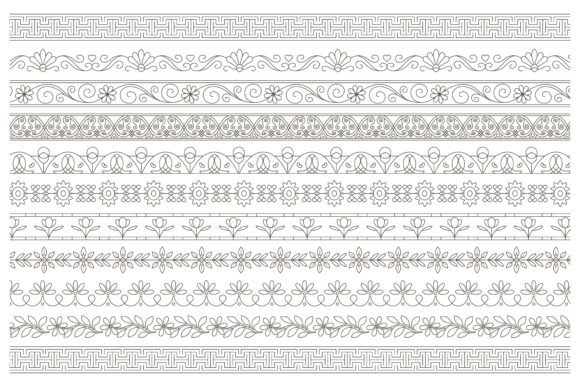
Greek Key and Decorative Border Pattern
The Greek key, also known as the meander, is an ancient design that has stood the test of time. Originating from classical Greek art, this pattern features continuous, unbroken lines that twist and turn in a rhythmic, flowing manner. When combined with decorative border elements, it becomes a powerful tool for adding elegance and sophistication to any visual project.
Modern interpretations of the Greek key often incorporate floral motifs, creating a harmonious blend of geometric precision and organic beauty. These borders are not just decorative—they serve as a bridge between the past and present, offering a timeless aesthetic that can enhance both traditional and contemporary designs.
Key Characteristics of Greek Key and Decorative Border Patterns
What makes Greek key and decorative border patterns so appealing is their versatility and adaptability. Here are some of the defining features:
- Complex Linework: Intricate lines create a sense of movement and depth, making the design visually engaging without overwhelming the viewer.
- Floral Ornamentation: Delicate flowers and vines add a softness that balances the sharpness of the geometric elements.
- Symmetry and Balance: The design often follows strict symmetry, which contributes to a sense of order and harmony.
- Timeless Appeal: Whether used in fashion, interior design, or digital media, these patterns maintain a classic charm that never goes out of style.
This combination of elements ensures that the Greek key and decorative border pattern remains relevant across different industries and applications.
Why It Matters in Design and Communication
For professionals in creative fields, understanding how to use these patterns effectively can make a significant difference in the quality and impact of their work. Whether you're designing a website, creating a print layout, or developing branding materials, the right border can elevate the overall look and feel of your project.
In marketing and advertising, for example, a well-chosen border can draw attention to key information, guide the viewer’s eye through the content, and reinforce brand identity. In educational materials, it can help organize information and make complex ideas more digestible.
For entrepreneurs and small business owners, incorporating these patterns into logos, packaging, or social media graphics can help differentiate their brand in a crowded market. It adds a layer of sophistication that communicates quality and attention to detail.
Practical Applications Across Industries
The Greek key and decorative border pattern is not limited to a single industry. Its adaptability makes it useful in a wide range of settings:
- Interior Design: Used in wallpaper, fabric, and furniture, these patterns can add character and refinement to any space.
- Graphic Design: Ideal for creating headers, dividers, and background textures in print and digital media.
- Textile and Fashion: Popular in clothing, accessories, and home decor, these patterns bring a touch of heritage and elegance.
- Web and App Design: Subtle borders can enhance user experience by improving readability and visual flow.
- Education and Publishing: Useful for book covers, lesson plans, and instructional materials to make content more engaging.
Each application benefits from the pattern's ability to add visual interest without distracting from the main message or purpose.
Benefits Beyond Aesthetics
Beyond its visual appeal, the Greek key and decorative border pattern offers several practical advantages:
- Enhanced Usability: Clear visual boundaries can help users navigate content more easily, especially in digital interfaces.
- Improved Branding: Consistent use of such patterns can reinforce brand identity and create a cohesive look across all platforms.
- Increased Engagement: Eye-catching designs can capture attention and encourage deeper interaction with the content.
- Time-Saving: Pre-designed border sets allow creators to focus on other aspects of their work without spending excessive time on layout details.
These benefits make the pattern a valuable asset for anyone involved in visual communication, whether professionally or as a hobbyist.
How to Choose and Use the Right Pattern
Selecting the right Greek key and decorative border pattern depends on the specific needs of your project. Consider the following factors:
- Style and Context: Choose a pattern that aligns with the overall tone and purpose of your design. A minimalist approach may suit modern projects, while more elaborate styles fit traditional or luxury contexts.
- Color Scheme: Ensure the pattern complements the colors used in your design. Neutral tones often work best for subtle borders, while bold colors can make a statement.
- Scale and Proportion: Avoid overwhelming the design with overly complex patterns. Keep the scale appropriate for the size of the space or medium.
- Source and Quality: Use high-resolution files to maintain clarity, especially when printing or scaling up for large formats.
By paying attention to these details, you can ensure that the pattern enhances rather than detracts from your work.
Real-World Examples and Recommendations
Many successful brands and designers have effectively used Greek key and decorative border patterns in their work. For instance, a boutique clothing line might incorporate these patterns into their packaging to evoke a sense of luxury and craftsmanship. A digital magazine could use them as section dividers to improve readability and flow.
If you're looking to integrate these patterns into your own projects, start with small, subtle applications. Test different styles and placements to see what works best for your audience. Over time, you'll develop a better sense of how to leverage these patterns for maximum impact.
Whether you're a designer, educator, marketer, or entrepreneur, the Greek key and decorative border pattern offers a powerful way to elevate your visual communication. With its rich history and modern relevance, it's a design element worth exploring for any project that values style, sophistication, and functionality.