Bridging Heritage and Hybrid Craft: The Strategic Value of Pastel Stamping - Victorian Tapestry
In the evolving landscape of creative industries, the boundary between traditional tactile craftsmanship and modern digital efficiency is becoming increasingly porous. Professionals, entrepreneurs, and independent creators are no longer choosing between these two worlds; they are integrating them to build more robust, scalable, and aesthetically distinct brands. At the forefront of this hybrid movement is the Pastel Stamping - Victorian Tapestry collection, a digital asset suite that exemplifies how historical nostalgia can be leveraged through contemporary technology to meet the sophisticated demands of today's market.
The Convergence of Analog Warmth and Digital Precision
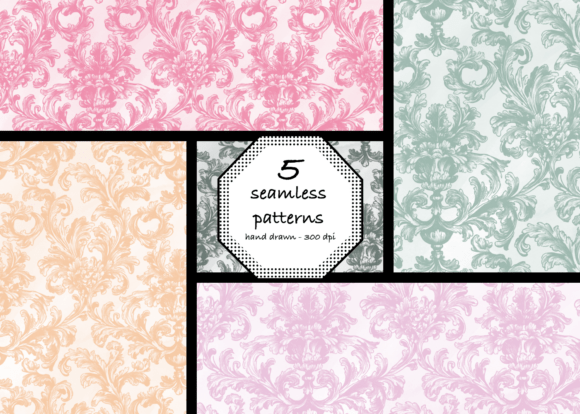
The Pastel Stamping - Victorian Tapestry set is not merely a collection of images; it is a strategic tool designed for the modern creator who understands the value of texture in a flat digital world. This set includes five high-resolution digital files featuring patterns that recall the intricate weave of a Victorian tapestry, rendered against a hand-drawn watercolor background. What makes this specific collection significant is its intentional design philosophy: it mimics the organic imperfections of hand-stamping and watercolor painting while delivering the mathematical precision required for seamless tiling in digital environments.
For decades, the design industry oscillated between ultra-minimalism and maximalist ornamentation. Currently, we are witnessing a powerful shift toward "hybrid crafting," where the warmth of analog materials is preserved through digital reproducibility. Consumers and clients alike are responding to designs that feel human and curated rather than algorithmically generated. The Pastel Stamping - Victorian Tapestry addresses this by offering motifs that possess the visual weight of traditional ink pads and paper textures, yet function flawlessly as backgrounds for web design, social media assets, and large-format printing.
Market Trends Driving the Demand for Nostalgic Textures
Why is there such a surge in attention toward assets like Pastel Stamping - Victorian Tapestry? The answer lies in broader consumer psychology and market trends. In an era dominated by sleek, screen-native interfaces, there is a growing fatigue regarding sterile perfection. Brands and creators are seeking ways to inject authenticity and emotional resonance into their visual communications. The Victorian aesthetic, characterized by its complexity and reverence for detail, offers a sense of permanence and quality that resonates with audiences craving substance.
Furthermore, the rise of the "maker economy" has empowered freelancers and small business owners to produce professional-grade goods without industrial overhead. However, these entrepreneurs face the challenge of maintaining consistency across physical and digital touchpoints. A junk journal seller, for instance, needs their physical product to match their Instagram aesthetic perfectly. The coordinated color palette of the Pastel Stamping - Victorian Tapestry is engineered to align with commonly used crafting ink pad ranges. This synchronization allows a creator to print a digital background, stamp over it with physical ink, and photograph the result for a digital listing, ensuring a cohesive brand narrative that spans both realms.
Adapting Workflows for Versatility and Scale
The relevance of this pattern set extends beyond aesthetics into the realm of workflow optimization. Modern creatives operate in multi-channel environments where a single asset must perform across various mediums. The Pastel Stamping - Victorian Tapestry files are created at 300 DPI, the industry standard for high-quality printing, yet they remain lightweight enough for efficient digital use. This dual-purpose functionality eliminates the need for separate asset libraries for print and web, streamlining the production process for agencies and solo practitioners alike.
Consider the workflow of a surface pattern designer or a planner manufacturer. They require repeating designs that tile perfectly to cover large surfaces without visible seams or awkward breaks. The technical execution of these five digital files ensures that whether the output is a roll of wrapping paper, a page in a daily planner, or a full-screen website background, the integrity of the Victorian motif remains intact. This reliability reduces revision time and accelerates time-to-market, a critical factor for entrepreneurs navigating fast-paced seasonal trends.
Practical Applications Across Creative Sectors
The utility of Pastel Stamping - Victorian Tapestry is best understood through its application in diverse projects. Its balanced motifs and cohesive pastel palette make it an ideal foundation for:
- Digital Paper and Scrapbook Designs: Creating themed packs for digital scrapbooking software where users can layer elements without losing the underlying texture.
- Junk Journals and Planners: Providing a vintage-inspired base that invites further embellishment with handwriting, washi tape, and physical ephemera.
- Collage and Mixed Media Projects: Serving as a unifying background that ties together disparate elements in a mixed media composition, offering a sense of depth and history.
- Surface Pattern and Background Design: Utilizing the seamless nature of the files for textile prints, packaging design, or UI backgrounds that require a soft, approachable feel.
Moreover, the color coordination is a subtle but powerful feature. By aligning with standard crafting ink colors, these patterns facilitate a "phygital" (physical + digital) workflow. A marketer creating a campaign for a craft supply brand can use these digital backgrounds in email newsletters and then encourage customers to replicate the look using physical stamps and inks that match the digital hex codes. This creates an immersive brand experience that engages the audience on multiple sensory levels.
Technical Considerations for Optimal Results
To fully leverage the potential of the Pastel Stamping - Victorian Tapestry set, understanding the technical nuances of digital-to-print conversion is essential. While the files are provided as high-resolution PNGs to ensure clarity and transparency support, the final output can vary based on the medium. For professionals aiming for color accuracy, it is crucial to recognize that screen settings and printer profiles differ.
For best results when printing these files, creators should utilize high-quality cardstock or textured paper that complements the watercolor aesthetic. Printing at 300 DPI ensures that the fine lines of the Victorian tapestry motif do not pixelate, preserving the illusion of a hand-drawn origin. Additionally, because these are digital downloads intended for flexible use, users are encouraged to test prints on their specific hardware to adjust saturation and contrast, ensuring the pastel tones remain soft and inviting rather than washed out.
The Future of Timeless Design Assets
As we look toward the future of creative commerce, the demand for assets that offer both flexibility and character will only intensify. The Pastel Stamping - Victorian Tapestry represents a shift away from disposable, trend-chasing graphics toward enduring design elements that can be adapted repeatedly. It acknowledges that while technology changes the way we produce and distribute art, the human desire for beauty, history, and tactile connection remains constant.
For the forward-thinking entrepreneur, investing in such versatile digital tools is an investment in brand longevity. It allows for the creation of a visual language that is instantly recognizable yet adaptable enough to evolve with changing project requirements. Whether used to elevate a simple journal entry or to anchor a complex marketing campaign, these patterns provide the structural elegance needed to stand out in a crowded marketplace.
In conclusion, the integration of Pastel Stamping - Victorian Tapestry into your creative toolkit is more than an aesthetic choice; it is a strategic alignment with the current trajectory of the design industry. It bridges the gap between the nostalgic charm of the past and the efficient demands of the future, offering a solution that is as practical as it is beautiful. By embracing these hybrid assets, creators can deliver work that feels deeply human while operating with the precision of modern technology.